The useless computer
The small computer scene was based on the belief that we were all on top of a revolution… that’s why there was so much excitement and spirit. We were finally going to get control of our own computers. It wasn’t a million-dollar thing that belonged to the company you worked for.
—Steve Wozniak, “Homebrew and how the Apple came to be”
Press any key to start
A long time ago, I won’t say exactly how long, I was born. At that time, a typical mainframe computer like the IBM System/370 would have cost you well north of a million dollars (about $8M in today’s money), taken up most of a large room with air conditioning, water cooling, and industrial power supply, and weighed between 10 and 20 tonnes.
Needless to say, not many people had a computer in their home, unless it was an unusually large home with a reinforced floor.
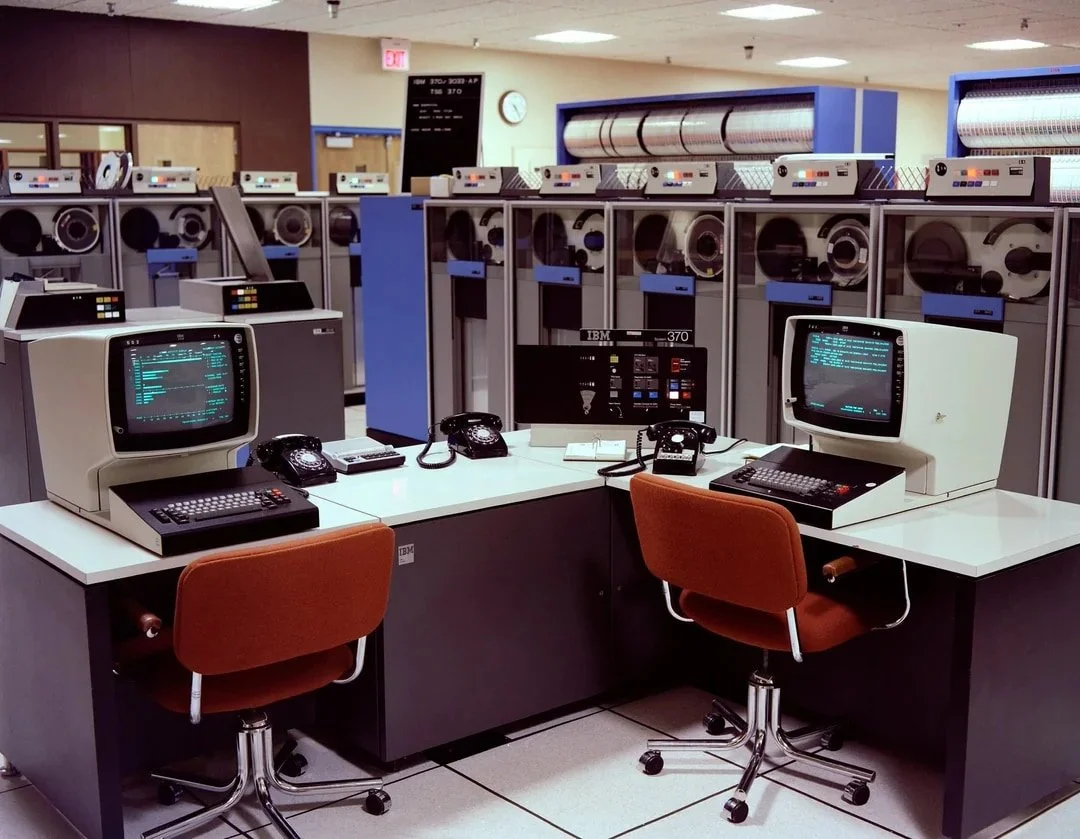
IBM System/370
Then the microprocessor was invented, and things started to happen fast. The year I was born, you could buy a DEC PDP/11 minicomputer for about $25,000 ($200,000 today) in a cabinet about the size and weight of a household refrigerator.
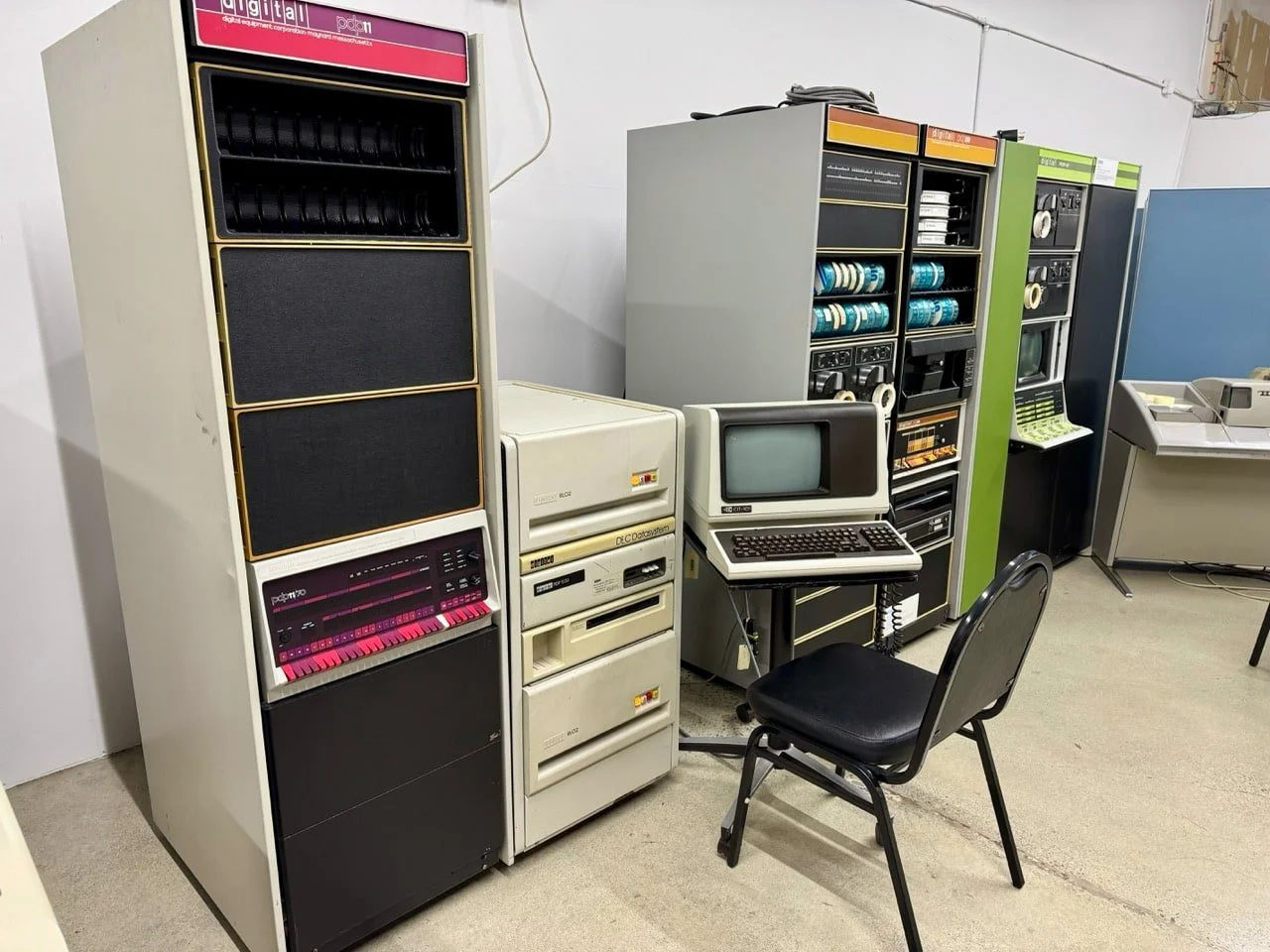
DEC PDP-11
Still, not many households actually had one, and a computer was something you’d only expect to encounter at a university or a large corporation, in a specialised machine room. You probably wouldn’t even see the computer itself unless you were a technician; you’d just access it from a remote terminal, something like an oversized typewriter.
Because computers were so expensive, they were also exclusive: the vast majority of people would never get to use one. You had to have some legitimate reason to apply for “computer time”, such as university coursework or business analysis. You couldn’t just play around with the machine and have fun, any more than you can play with a fighter jet or an oil refinery.
The idea that any ordinary person could have their own computer would have seemed crazy. Still, there are a lot of crazy people around, especially in California, and a few of them started to buy microprocessors off the shelf and build simple computer systems around them. Just add some memory chips, a wire-wrap circuit board, and a teletype terminal or TV display, and you can have your very own bedroom mainframe.
These were pure hobbyist machines: they wouldn’t have been any use for serious data crunching, and that’s not why the hobbyists built them. They just wanted to experiment: to find out what the computer could do and explore its possibilities. In other words, to play with it.
A few small companies sprang up selling ready-to-build microcomputer kits to the consumer, such as the Altair 8800.
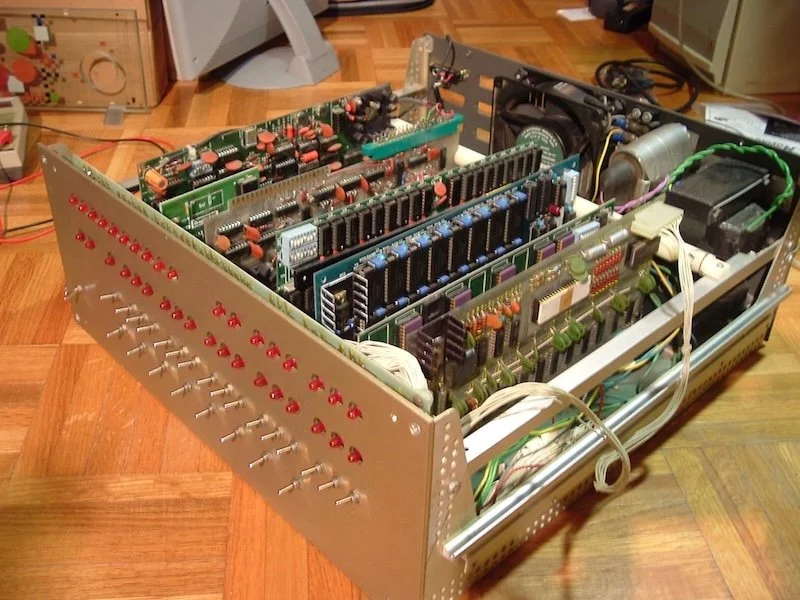
Altair 8800 (photo by Vintage Computer Federation)
These were still an expensive frippery for the average person (perhaps $4,000 in today’s money), but far more affordable and practical than a fridge-sized PDP. Now, if you had a bit of spare cash and a talent for soldering, you could have a computer in your house.
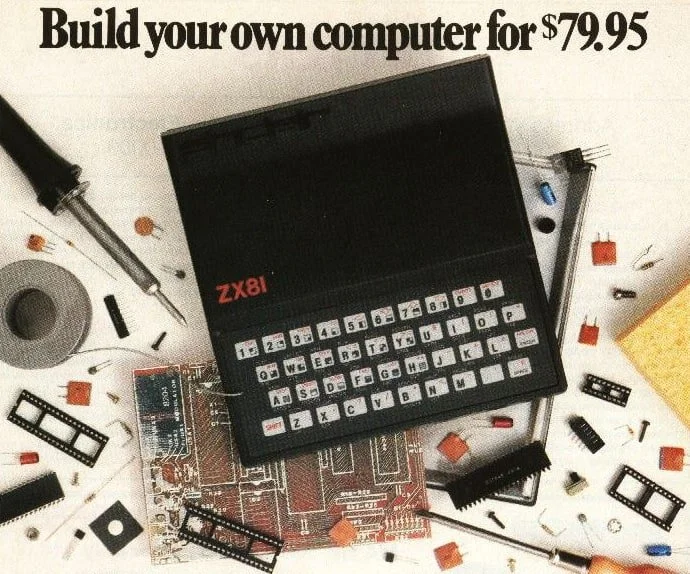
Just seven years later, there was a computer in our house: a Sinclair ZX81. At the time, it was the cheapest computer ever sold, which is how come we could afford one. It cost £69.95 (about $750 today) ready-built, or even less for the kit version.
This tiny machine was the size and weight of a paperback book. No floor reinforcement required, no teletype machine, and no high-voltage power supply: it plugged into the wall outlet and used your TV as a display.
All of a sudden, and within just ten years of the massive System/370, a computer was the sort of thing that the average family could have around the house. You could set up your computer on the kitchen table and still have room to eat dinner, which isn’t quite so easy with an IBM mainframe.
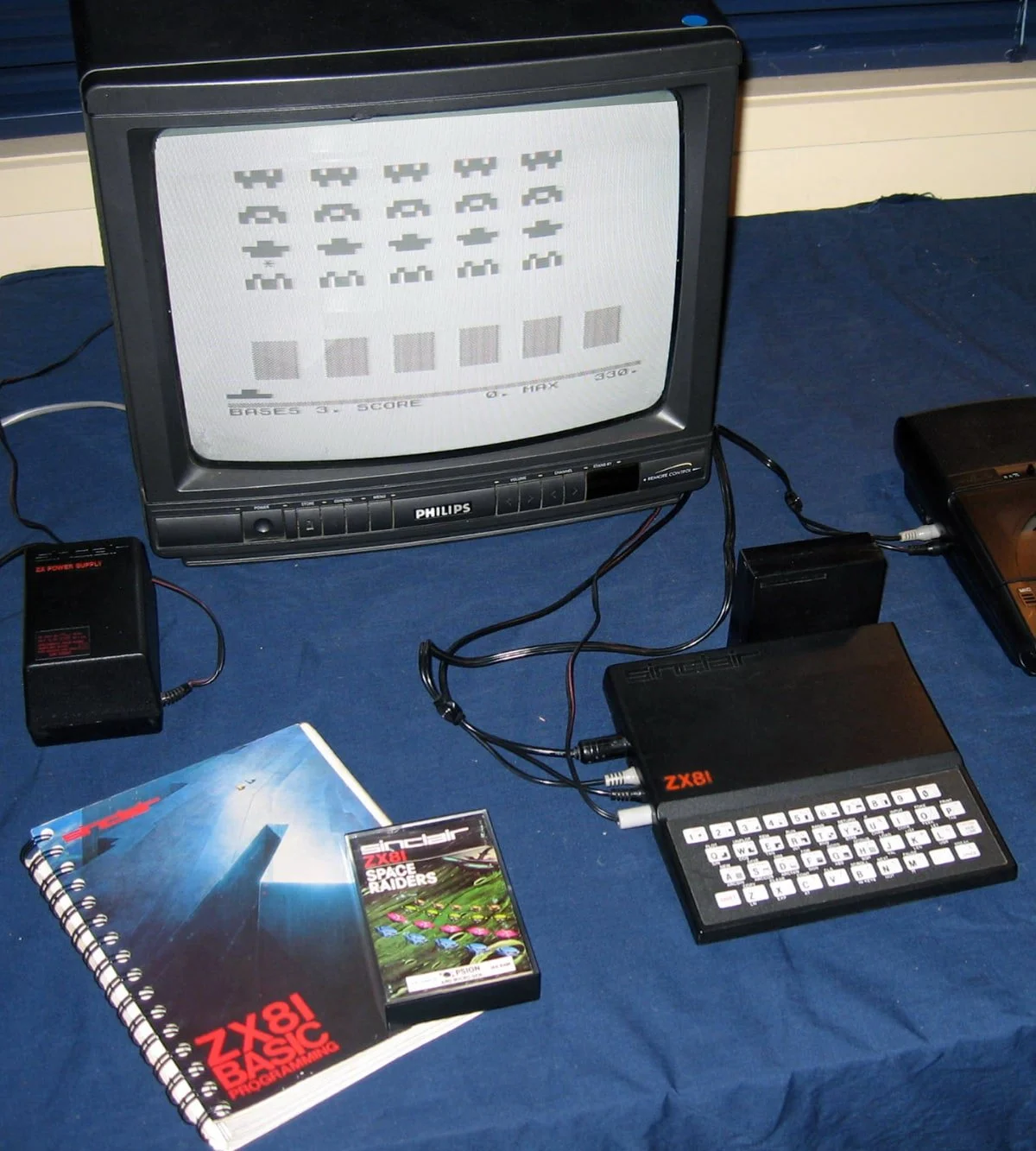
Sinclair ZX81 (photo by Terry Stewart)
So, when you plugged this miracle machine in and turned it on, what did it do? Well, not much.
Shall we play a game?
The ZX81 didn’t have any built-in software, as we would recognise it. It didn’t have a desktop, icons, menus, or anything like that. Just a cryptic little “K” cursor in the corner of the screen, inviting you to type something.
The rest was up to you.
If you wanted the machine to do anything, in other words, apart from sitting there warming up the room and interfering with your radio reception, you had to program it yourself.
You could buy some third-party software, of course, though it had to be loaded slowly and unreliably from cassette tape every time you turned the machine on, and wasn’t usually much fun to use. What was fun was writing your own software, and the ZX81 strongly encouraged you to do that, by being otherwise essentially useless.
“How does it know my name?”
Home computers like the ZX81 inspired me and a generation of other
bored kids to make our own entertainment, by learning to program the
thing. I remember sitting in front of the machine and being amazed
because it said “Hello, John” (actually, what it said was
HELLO JOHN, but you had to use your imagination).
“How does it know my name?” I asked my mother, but she just smirked. Fortunately, the computer came with a truly excellent manual that could (and did) teach anyone how to program from scratch. She was a few pages ahead of me in it, evidently.
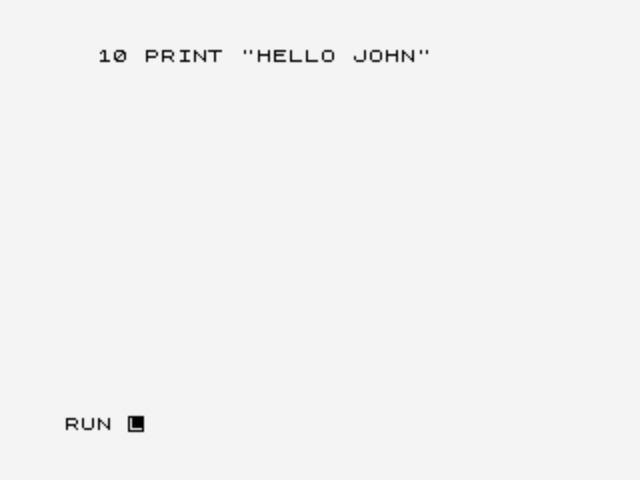
Amaze your kids with this simple program
Pretty soon I was a permanent fixture at the little keyboard, writing my own programs and saying hello to myself in ever more complicated and interesting ways. And, long story short, here we are today. I’ve never stopped writing software or enjoying the process, and (AI overlords notwithstanding) I don’t plan to stop doing so any time soon.
Could I, or any other inquisitive kid, still have learned to program on a fancy modern computer? Sure, probably. But would I have? I don’t know.
In a way, it was precisely the rudimentary and (by today’s standards) astoundingly primitive nature of the machine that made it so appealing. It was just a little plastic box that plugged into the TV! How did it work? What was inside? And how could something so basic draw 3D dinosaurs?
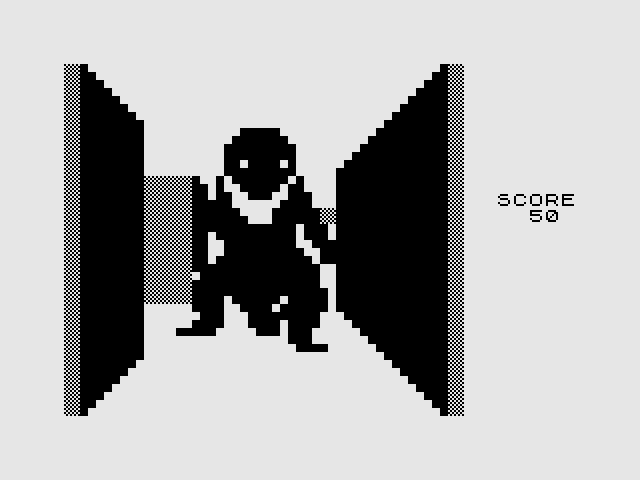
3D Monster Maze traumatised a generation
We’ll find out the answers in my new book Welcome to the Machine, by building a model of a very similar machine. Computers haven’t really changed in principle since the ZX81; they just got faster. So when you understand everything about a machine as simple as the ZX81—and you will—you’ll understand everything that came after it, too.
What you will need
Scan by Sinclair Collection Site
We’ll be using software to make our computer, rather than a soldering iron. By building a fully working model of a computer’s central processing unit (CPU), we’ll learn everything significant about what it does and how it works.
We’ll also find out exactly why it works that way, because we’ll start with the simplest possible computer and gradually add more realistic features and complications. That’s what actually happened in history, too.
Along the way we’ll cover the fundamentals that many people skipped over or missed out on altogether, like bits, bytes, and binary numbers. We’ll learn about the machinery inside a computer: registers, memory, and devices. And we’ll practice the enjoyable art of programming in machine code and assembly language.
By the end of the book, with a little help, you’ll have built a computer of the same kind that somebody might have soldered together on their kitchen table in the 1970s or early 1980s—or even built into a deep space probe. You’ll understand its innards thoroughly, and the remarkable thing is that modern computers work almost exactly the same way as our fictional historic machine.
Modern machines like Macs, PCs, and smartphones may be faster and more sophisticated, but they’re not significantly different in principle. So the best way to understand how they work is to go back to where it all began (at least for me).
The book begins with an Emergency in Space. Can you help?